If you are researching types of industrial pallet racking systems, you are likely facing a you have run out of room, or your current workflow is too slow. Choosing the right configuration isn’t just about buying steel; it is a strategic trade-off between Storage Density (how much fits in the box) and Selectivity (how fast you can get it out).
Make the wrong choice, and you end up with a warehouse full of air or a bottleneck that kills your shipping throughput.
This guide break down the engineering logic, operational costs, and “gotchas” of the six core racking systems. Whether you manage a high-turnover distribution center or a deep-freeze cold storage facility, this analysis will help you maximize your footprint without sacrificing speed.
Key Takeaways
- Selective Racking: 100% access to every pallet. Lowest cost per pallet position.
- LIFO Drive-In Racking: Eliminates aisles for maximum storage. Ideal for bulk, seasonal items.
- Push Back Racking: High density like Drive-In, but faster picking because forklifts stay in the aisle.
- FIFO Pallet Flow Racking: Gravity-fed rollers guarantee strict stock rotation for food/pharma.
- Cantilever Racking: No front columns. Mandatory for lumber, pipe, and furniture.
- The Rule of Thumb: You cannot have 100% density and 100% selectivity. You must pick a lane based on your SKU count.
Storage Density vs. Access Speed
Before we critique the hardware, look at your data. Every industrial racking system sits somewhere on a sliding scale.
- Selectivity (Speed): The ability for a forklift to grab any specific pallet instantly.
- High Selectivity needed for: High SKU counts, low pallet quantities per SKU, e-commerce picking.
- Density (Volume): How many pallets you can store per cubic foot.
- High Density needed for: Low SKU counts, bulk manufacturing, expensive real estate (like freezers).
Your choice dictates your inventory flow. Do you need FIFO (First-In, First-Out) to prevent spoilage, or can you tolerate LIFO (Last-In, First-Out) to save space?
Racking Systems at a Glance
| Racking Type | Storage Density | Selectivity | Cost Index | Flow Logic | Best Use Case |
| Selective Pallet Racking(Standard) | Low | 100% | $ | Any | High SKU mix, fast turnover |
| Double Deep Pallet Racking | Medium | 50% | $ | LIFO | Balancing density & budget |
| Drive-In Pallet Racking | Very High | Low | $$ | LIFO | Bulk storage, Cold Storage |
| Push Back Racking | High | Medium | $$$ | LIFO | High density + Speed |
| Pallet Flow Racking | Very High | Low | $$$$ | FIFO | Food, Bev, Pharma (Strict Dates) |
| Cantilever Racking | N/A | High | $$$ | Random | Lumber, Pipe, Steel |
1. Selective Pallet Racking
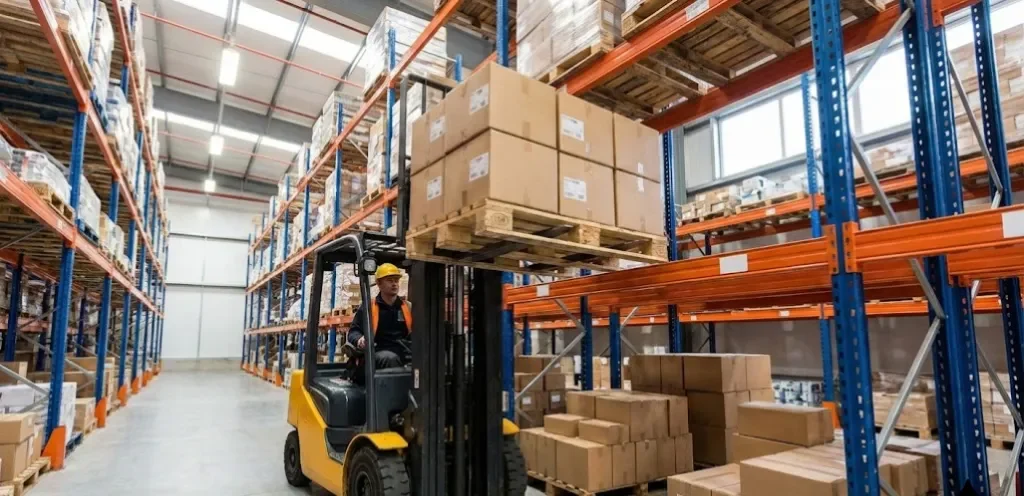
Selective pallet racking is what 90% of warehouses use. It consists of upright frames and cross beams, typically arranged in single-deep rows back-to-back.
Why Choose Selective Racking?
It offers 100% Selectivity. A forklift operator never has to move a “blocked” pallet to get to the one they need. This makes it the only logical choice for warehouses with thousands of different SKUs where any item might be ordered at any time.
The “Teardrop” Advantage
Most modern selective systems use a “Teardrop” style connection. The beams slide into tear-shaped holes on the uprights and lock in place with a safety clip.
- Why it matters: It’s universal. You can often mix and match brands, and adjusting beam heights requires no tools.
Pros & Cons
- Pros: Lowest upfront capital investment; compatible with standard counterbalance forklifts; immediate access to inventory.
- Cons: “Air Storage.” You are paying to heat and light a lot of empty aisle space.
2. Drive-In and Drive-Through Racking
If Selective Racking is about access, Drive-In Racking is about raw storage power. By eliminating aisles, you can store up to 75% more pallets in the same square footage.
How It Works (The LIFO Trap)
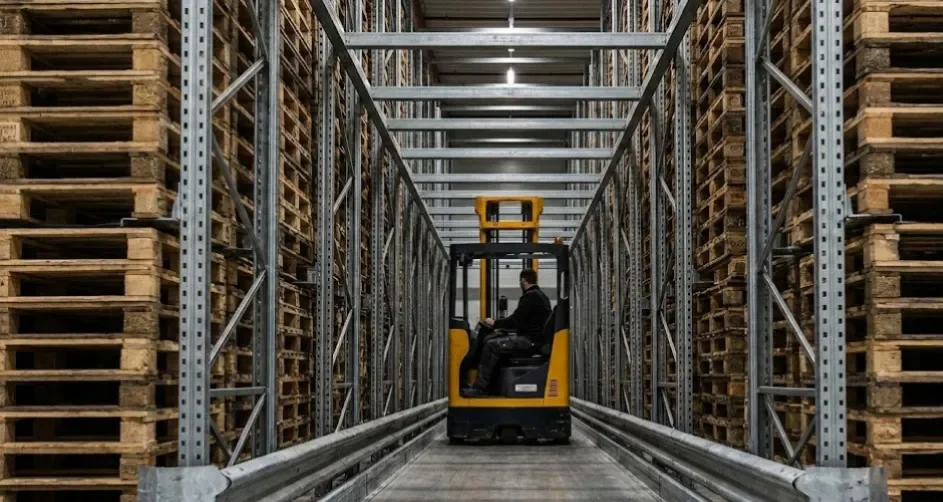
Forklifts drive into the rack structure on rails. You fill a lane from back to front. To get to the pallet in the back, you must remove everything in front of it.
- Warning: This creates a strict LIFO (Last-In, First-Out) environment. Do not use this for goods with short expiration dates unless you turn over the entire lane at once.
The “Honeycombing” Issue
This is a hidden inefficiency. If you have a lane 10 pallets deep, but you only have 3 pallets of that SKU left, you have 7 empty slots that you can’t use for a different SKU (unless you want to block the old ones). This lost capacity is called “honeycombing.” Best For: Manufacturers producing huge batches of the same product, or cold storage where energy costs per square foot are astronomical.
3. Push Back Racking
Many buyers compare Push Back vs. Drive-In. While Drive-In is cheaper, Push Back is faster and safer.
The Mechanics
Pallets sit on nested carts on an inclined rail. When a driver loads a pallet, they use the new pallet to “push back” the existing ones. When they retrieve a pallet, gravity rolls the next one forward to the aisle face.
Why Operators Prefer It
In a Drive-In system, the forklift driver has to carefully navigate inside the steel structure—a recipe for rack damage and slow movement. In Push Back, the driver stays in the aisle.
- Result: Faster loading/unloading and significantly less damage to uprights.
Best For: Operations that need high density but can’t afford the slow throughput of Drive-In racking.
4. Pallet Flow Racking
Pallet Flow Racking turns your storage into a conveyor belt. It is the only high-density system that supports FIFO (First-In, First-Out).
First In, First Out
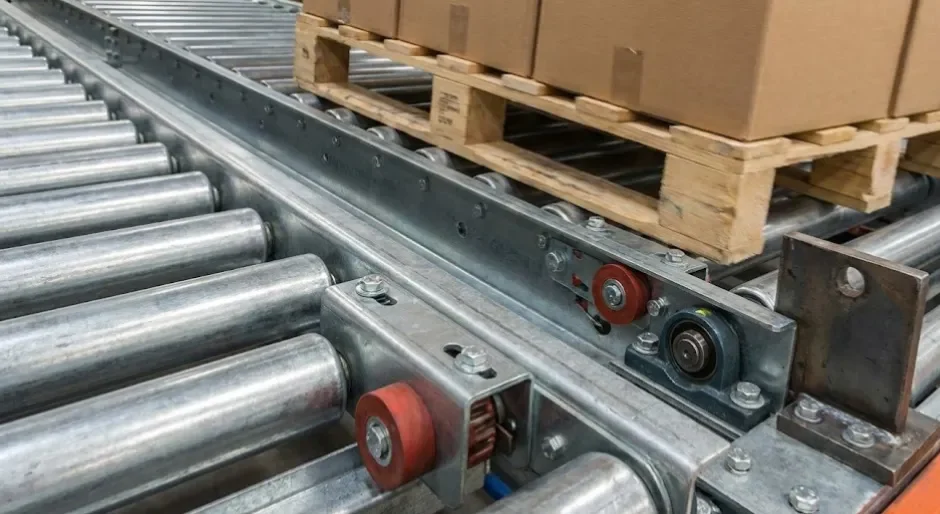
You load from the back (Charge Side) and pick from the front (Discharge Side). Gravity rollers control the speed of the pallet as it flows down.
- The Food & Bev Essential: If you distribute milk, produce, or pharmaceuticals, stock rotation isn’t optional; it’s a requirement. Pallet Flow guarantees the oldest product is picked first.
The Cost Reality
You are paying for engineered rollers, brakes, and flow rails for every single pallet position. The ROI comes from space savings and zero spoiled inventory, not from the hardware cost.
5. Cantilever Racking
Not everything fits on a 40×48 wooden pallet. If you store lumber, PVC piping, steel bar stock, or furniture, standard racking is useless (and dangerous).
No Front Columns
Cantilever Racking uses a center tower with arms extending out. The lack of a front column means you can load a 20-foot steel pipe or a 40-foot bundle of lumber without obstruction.
- Pro Tip: Arms can be straight (for flat loads) or inclined (to prevent round pipes from rolling off).
Forklifts, Steel Grades, and Seismic Risks
1. Aisle Width Dictates Your Forklift Fleet
Your racking layout is useless if your forklifts can’t turn around.
- Standard Aisles (12ft): required for cheap, standard counterbalance lifts.
- Narrow Aisles (9ft): required for Reach Trucks. If you switch to double-deep or narrow aisle selective, you must own reach trucks.
- VNA (Very Narrow Aisle) (<6ft): required for Turret Trucks. These trucks are expensive and often require wire guidance systems embedded in the concrete floor.
- The Trap: Saving space on aisles saves rent, but costs more in equipment. Run the numbers on both.
2. Roll-Formed vs. Structural Steel
- Roll-Formed: Steel is cold-rolled into shape. It relies on shape for strength. It’s cheaper and lighter. Perfect for standard warehouse distribution.
- Structural Steel: Hot-rolled C-Channel steel (like the frame of a truck). It is bolted, not clipped.
- When to upgrade: If you are in a heavy manufacturing environment where forklifts constantly bump the racks, roll-formed steel will buckle. Structural steel can take the hit.
3. Seismic Zones
If your warehouse is in California, or even moderate seismic zones like parts of the Midwest, “standard catalog” capacities are illegal. You may need:
- Larger footplates (e.g., 5″x7″ or larger).
- Heavier gauge steel.
- Tighter beam spacing.
- Action Item: Always demand a Seismic Calculation Package sealed by a professional engineer in your state.
FAQ: Common Questions About Pallet Racking
What is the most common type of pallet racking?
Which racking system is best for FIFO (First-In, First-Out)?
What is the difference between drive-in and drive-through racking?
How do I calculate the rack capacity I need?
What is the difference between Single Deep and Double Deep racking?
How much clearance do I need between the top pallet and the ceiling?
Can I mix different types of racking in one warehouse?
Does used racking save money?
Conclusion
Selecting the right types of industrial pallet racking systems is the foundation of your warehouse’s profitability.
- If you need speed and access: Stick to Selective pallet Racking .
- If you need density for cold storage: Go Drive-In Racking .
- If you need density and speed: Invest in Push Back.
The cheapest rack isn’t the one with the lowest price tag; it’s the one that ensures your forklift drivers aren’t wasting hours driving past empty air or moving pallets just to get to the one they need.
Ready to maximize your warehouse footprint? At Spieth, we don’t just sell steel; we design workflows. Contact our engineering team today for a free CAD layout analysis of your facility. Let’s stop storing air and start storing profit.