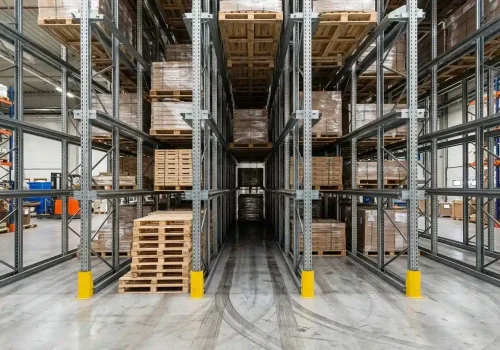
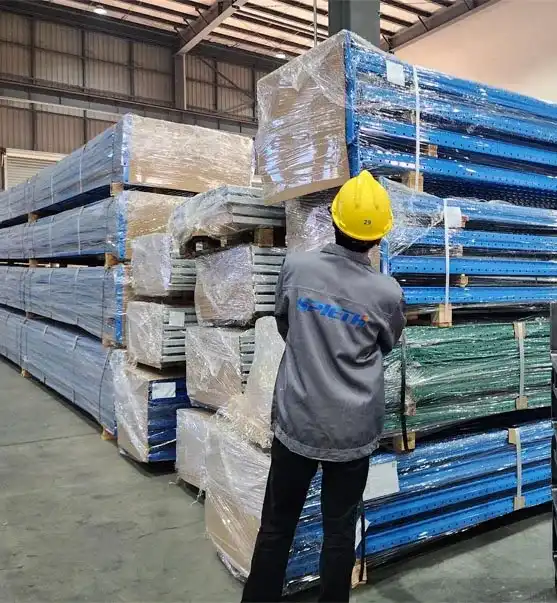
When you manage a warehouse facility exposed to moisture, extreme temperatures, or harsh chemicals, standard powder-coated shelving will inevitably fail. Rust compromises structural integrity, leading to safety hazards and expensive replacements. For these demanding environments, you need a heavy-duty solution engineered to withstand the elements.
This guide dives deep into the technical and operational aspects of galvanized pallet racking, explaining exactly why it is the industry standard for challenging storage conditions.
Key Takeaways
- Applications: Designed specifically for outdoor storage, cold rooms, and chemical facilities where standard paint fails.
- ROI: While initial costs are slightly higher, the near-zero maintenance and decades-long lifespan drastically lower your Total Cost of Ownership (TCO).
- Heavy-Duty Specs: Manufactured using high-yield steel with customizable load capacities to meet specific industrial demands.
- Protection: Relies on a metallurgical bond and cathodic protection, allowing the steel to “self-heal” minor scratches without rusting.
What Are the Main Uses of Galvanized Pallet Racking?
Standard indoor warehouses typically maintain climate control, but many industrial operations do not have that luxury. You must align your storage infrastructure with your environmental reality. The robust nature of galvanized pallet racking makes it the only viable choice for several specific applications.
1. Cold Storage and Freezer Environments
When forklifts move between ambient loading docks and deep-freeze storage zones, rapid temperature fluctuations cause moisture to build up directly on the steel structural frames.
Standard paint or powder coating forms a mere physical barrier. In sub-zero temperatures, these coatings become brittle. A slight bump from a pallet will chip the paint, exposing the raw steel to moisture, leading to rapid, hidden oxidation. Galvanized pallet racking eliminates this risk. The zinc coating is unaffected by extreme freezing and thawing cycles, ensuring your freezer storage remains structurally sound and hygienic.
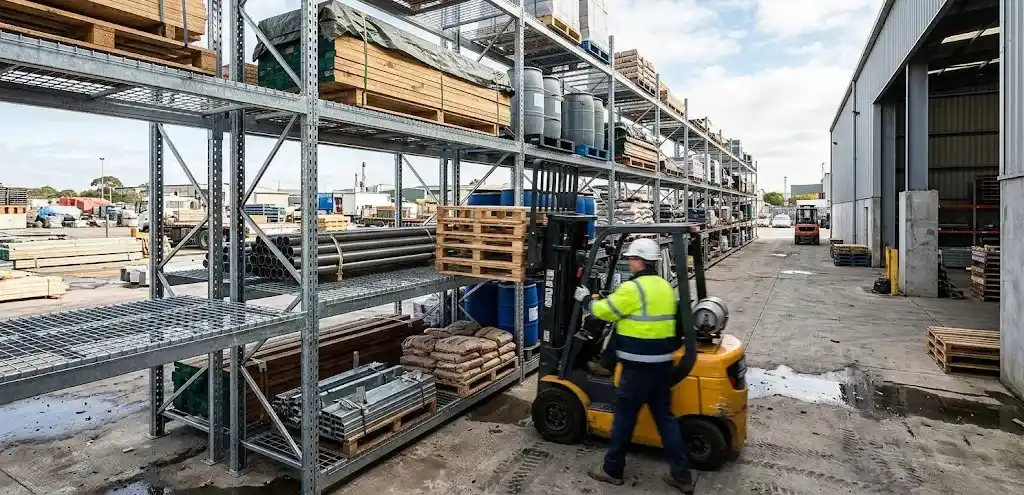
2. Outdoor Warehouse Storage Facilities
To optimize land use and reduce overhead, many businesses—particularly in construction, agriculture, and heavy machinery—store bulk goods outdoors.
When you place galvanized pallet racking outside, the galvanized pallet racking faces relentless UV radiation, heavy rainfall, snow, and in coastal areas, highly corrosive salt spray. Galvanized pallet racking is engineered for precisely this exposure. The hot-dip galvanizing process creates a barrier that resists UV degradation and sheds water, allowing you to maximize your outdoor footprint without fearing structural collapse.
3. Chemical and Harsh Industrial Storage
Chemical processing plants, fertilizer storage, and pharmaceutical manufacturing often involve airborne corrosive agents or the risk of accidental liquid spills. Standard steel degrades rapidly when exposed to acidic or alkaline substances. Galvanized pallet racking provides an exceptionally resilient chemical barrier. Even if aggressive compounds spill onto the beams or uprights, the thick zinc layer protects the core steel, giving your maintenance team ample time to clean the spill before structural damage occurs.
Benefits and Advantages of Using Galvanized Racking Systems in a Warehouse
Integrating galvanized racking systems into your warehouse layout delivers immediate safety upgrades and long-term financial benefits.
1. Corrosion Resistance and Durability
The primary advantage is undeniable: these galvanized racking systems do not rust under normal or moderately severe conditions. Unlike paint, which sits on top of the steel, the hot-dip galvanizing process physically alters the surface of the metal. This results in a coating hardness that often exceeds the base steel itself. When your forklift operators inevitably scrape a pallet against the upright frame, galvanized racking systems resist the deep gouging that would typically strip paint and invite rust.
2. Long-Term Cost Efficiency and ROI
Procurement managers sometimes hesitate at the upfront cost of galvanized racking systems, which can be 15% to 30% higher than standard powder-coated alternatives. However, you must evaluate the Total Cost of Ownership (TCO).
If you install painted shelves outdoors or in a wash-down environment, you will likely need to sandblast and repaint them within five years, or replace them entirely within ten. Galvanized racking systems require virtually zero maintenance. They do not need touch-up paint. Over a 20-year operational lifecycle, galvanized racking systems are significantly cheaper, yielding a much higher Return on Investment (ROI).
3. Hygiene and Easy Maintenance
For food and beverage distributors, cleanliness is mandated by strict regulations. Warehouses require frequent high-pressure wash-downs using aggressive cleaning detergents. Paint can flake off and contaminate food products. The surfaces of galvanized racking systems are smooth, entirely stable, and unaffected by standard industrial cleaning agents, making galvanized racking systems perfectly suited for FDA-compliant or HACCP-certified facilities.
Data Comparison: Galvanized Racking Systems vs. Powder-Coated Shelving
| Feature | Galvanized Racking Systems | Powder-Coated Shelving |
| Coating Bonding Method | Metallurgical bond (alloy layers) | Mechanical adhesion (surface level) |
| Scratch Resistance | Extremely High (Self-healing properties) | Low (Scratches expose bare steel) |
| Ideal Environment | Outdoors, Cold Rooms, High Humidity | Climate-controlled indoors only |
| Maintenance Required | None | Regular inspection and touch-up painting |
| Estimated Lifespan | 20 to 50+ years | 3 to 7 years (before structural compromise) |
Galvanized Industrial Storage Rack Specifications
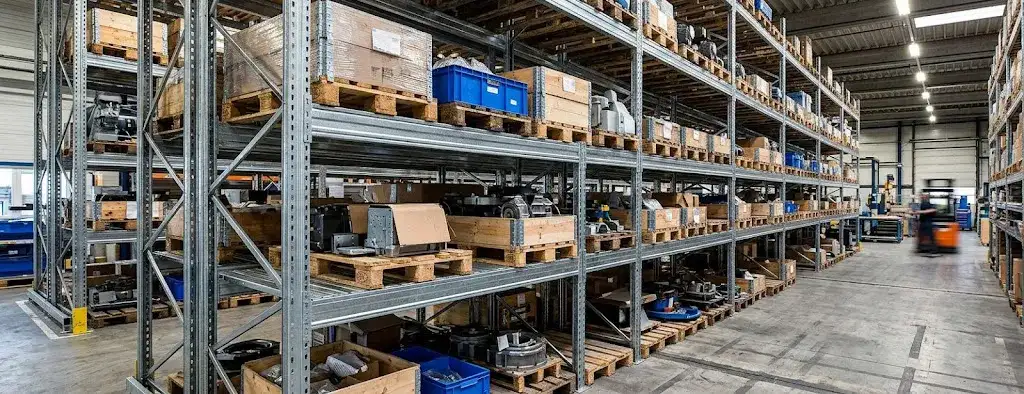
When engineering a heavy-duty storage solution, precise specifications guarantee safety. As a manufacturer, we produce every galvanized industrial storage rack to meet exact load tolerances and international safety standards (such as RMI and FEM).
Material Grades and Profiling
The foundation of a reliable galvanized industrial storage rack is the quality of the raw steel. We exclusively utilize high-yield carbon steel, typically graded Q235B or Q345B (equivalent to S235JR and S355JR).
The uprights are cold-rolled into complex “Omega” profiles. This multi-fold design drastically increases the load-bearing capacity and twisting resistance of the columns. The beams are typically closed-box sections or step beams, continuously welded to secure end connectors.
Standard Dimension Ranges
Every warehouse is unique, which is why we offer extensive customization. However, establishing baseline specifications for your galvanized industrial storage rack helps in your preliminary facility planning.
| Specification Parameter | Standard Range / Description |
| Upright Height | 1,500 mm to 15,000 mm (Splicing available for higher tiers) |
| Frame Depth | 800 mm, 900 mm, 1000 mm, 1200 mm (Matches standard Euro/US pallets) |
| Beam Length | 1,200 mm to 4,000 mm (Typically designed for 2 to 4 pallets per level) |
| Load Capacity (Per Level) | 1,000 kg to 5,000 kg (Engineered based on beam profile and thickness) |
| Hole Pitching | 50 mm, 50.8 mm (2″), 75 mm, 76.2 mm (3″) for high adjustability |
| Steel Thickness | 1.5 mm to 3.0 mm (Depending on engineered load requirements) |
Galvanized Accessories
To maximize safety, your galvanized industrial storage rack should be equipped with identically treated accessories. This includes column protectors (post guards) to defend against direct forklift impacts, galvanized wire mesh decks to comply with fire sprinkler regulations, and pallet support bars for handling non-standard or weakened pallets.
Need to calculate the exact load capacity required for your inventory? Use our proprietary rack load calculator tool on our engineering resources page to determine the ideal beam profile.
How Does Hot-Dip Galvanizing Protect Pallet Racking from Corrosion?
The term hot-dip galvanizing refers to a highly specific industrial process that provides defense mechanisms that no paint or epoxy can replicate.
The Metallurgical Bonding Process
Hot-dip galvanizing is not a coating; hot-dip galvanizing is a chemical reaction. After the raw steel racking components are manufactured, they undergo a rigorous cleaning process involving degreasing, acid pickling, and fluxing to remove all mill scale and oxides.
The clean steel is then completely submerged in a bath of molten zinc maintained at approximately 450C (842F). At this extreme temperature, the iron in the steel reacts with the molten zinc to form a series of zinc-iron alloy layers.
From the base steel outward, these layers include the Gamma, Delta, and Zeta layers, topped with a pure zinc Eta layer. The inner alloy layers are incredibly dense and actually harder than the base steel itself. This metallurgical bond means the zinc becomes an integral part of the steel, making it virtually impossible to peel or flake off.
Cathodic Protection (The Sacrificial Anode)
This is the most critical scientific advantage of hot-dip galvanizing. In the electrochemical series, zinc is a more anodic (active) metal than iron or steel.
If a forklift fork violently strikes the rack and manages to gouge all the way through the tough alloy layers to expose the bare steel underneath, standard paint would allow rust to form immediately and creep beneath the coating.
However, because of cathodic protection, the surrounding zinc acts as a “sacrificial anode.” The zinc will willingly corrode itself to protect the newly exposed steel (the cathode). As long as there is zinc in the immediate vicinity of the scratch (usually effective up to several millimeters away), the steel will not rust. The galvanized pallet racking essentially “self-heals” the breach.
Complete 360-Degree Coverage
Unlike spray painting, where angles, corners, and the inside of tubular steel are frequently missed, total immersion in molten zinc ensures comprehensive coverage. Every inch of the upright’s interior cavity, every bolt hole, and every welded seam is coated with a uniform layer of protective zinc, leaving zero weak points for corrosion to begin.
Pallet Racking Manufacturer: Your Storage Solution Partner
As a leading pallet racking manufacturer, we research and manufacture galvanized racking systems. From the cold rolling of steel coils to the precise temperature control of the galvanizing tanks, we ensure you receive truly high-quality galvanized industrial storage racking systems that meet international certifications (RMI/FEM standards).
Whether you are an end-user equipping a large cold chain distribution center or a system integrator looking for a reliable OEM/ODM pallet racking manufacturing partner to undertake customized storage projects, we can meet your production needs. Contact our technical sales team today, share your warehouse layout, and we will provide you with a comprehensive structural analysis and a highly competitive factory quote for your galvanized pallet racking project.