The Definitive Guide to Industrial Racking Capacity: Engineering for Warehouse Safety and Throughput
For warehouse procurement officers and facility managers, understanding the structural limits of a storage system is not a DIY project—it is a critical operational requirement. Selecting the wrong load capacity for your distribution center can lead to catastrophic structural failures, safety violations, and costly operational downtime.
Unlike lightweight residential shelving, heavy-duty industrial racking relies on precise engineering metrics: the tensile strength of Q235B/Q355 steel, the deflection limits of box beams, and the buckling resistance of upright frames. This technical guide covers the essential formulas and standards you need to specify the correct racking system for your high-density inventory.
Key Takeaways
- Distinguishing Load Types: Why beam capacity and upright frame capacity are independent yet interconnected metrics.
- The Vertical Spacing Rule: How changing the distance between shelf levels drastically alters your total frame capacity.
- Calculating UDL: The correct formula for determining safe load limits per pallet position.
- Deflection Limits: Understanding the acceptable “bend” in beams under load according to ISO and RMI standards.
- Safety Factors: Critical considerations regarding floor capacity, seismic zones, and forklift impact.
1. The Core Engineering: Beam Capacity vs. Frame Capacity
Frame capacity also depends on:pallet rack load capacity, you must treat the system as two distinct structural components working in tandem. Many operational errors occur when users assume that if the beams are strong enough, the whole system is safe. This is a dangerous misconception.
Beam Capacity (The Horizontal Load)
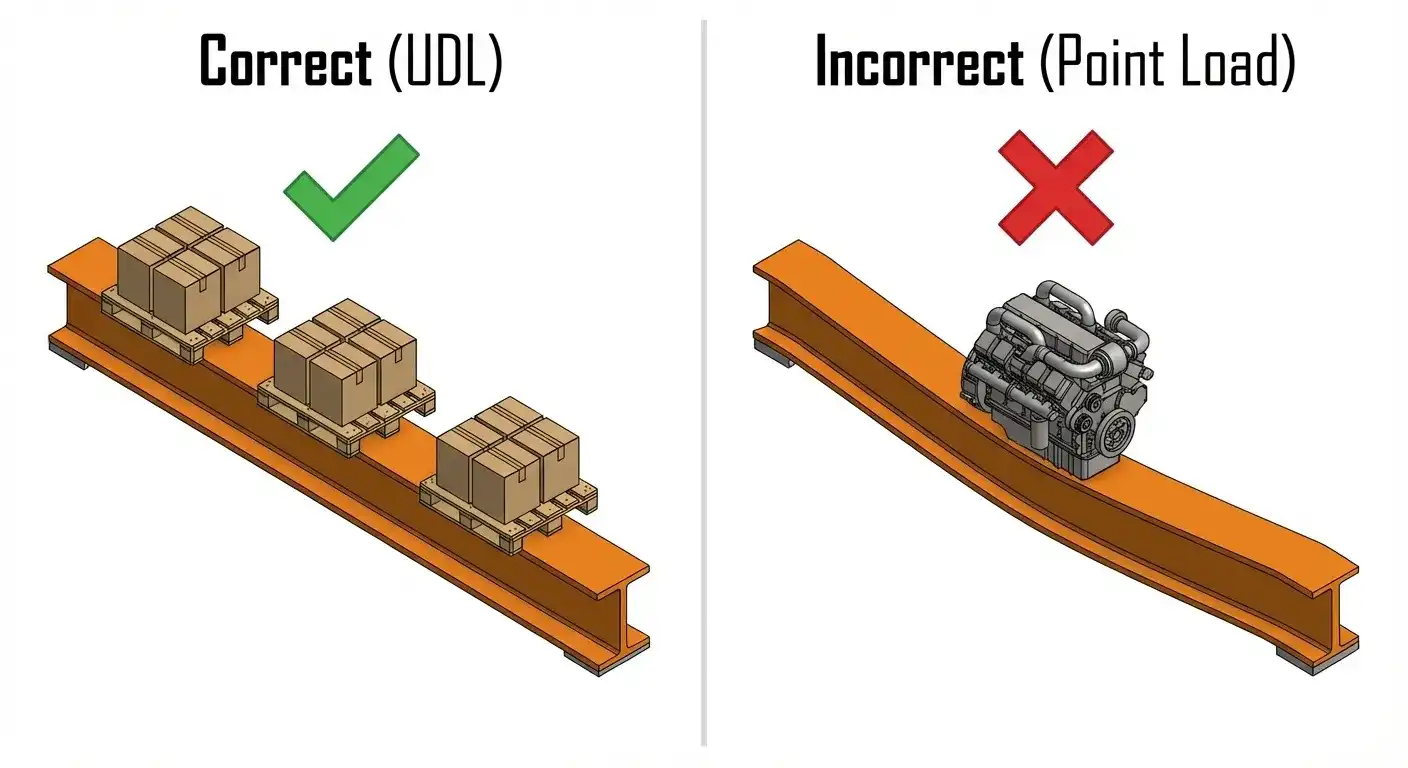
Beam capacity refers to the maximum weight a pair of beams can support per shelf level. This rating is almost always based on a Uniformly Distributed Load (UDL).
- What is UDL? It assumes the weight is spread evenly across the entire length of the beam pair. Point loading—placing a heavy, small object in the exact center of the beam—can cause failure even if the total weight is below the rated capacity.
- Deflection Standards: All beams will bend slightly under load. The industry standard (often 1/180th or 1/200th of the span) dictates the maximum safe deflection. If a beam bows visibly beyond these limits, it is overloaded.
Upright Frame Capacity (The Vertical Load)
Before calculating anything, you must account for these physical factors that govern structural performance.not a fixed number.
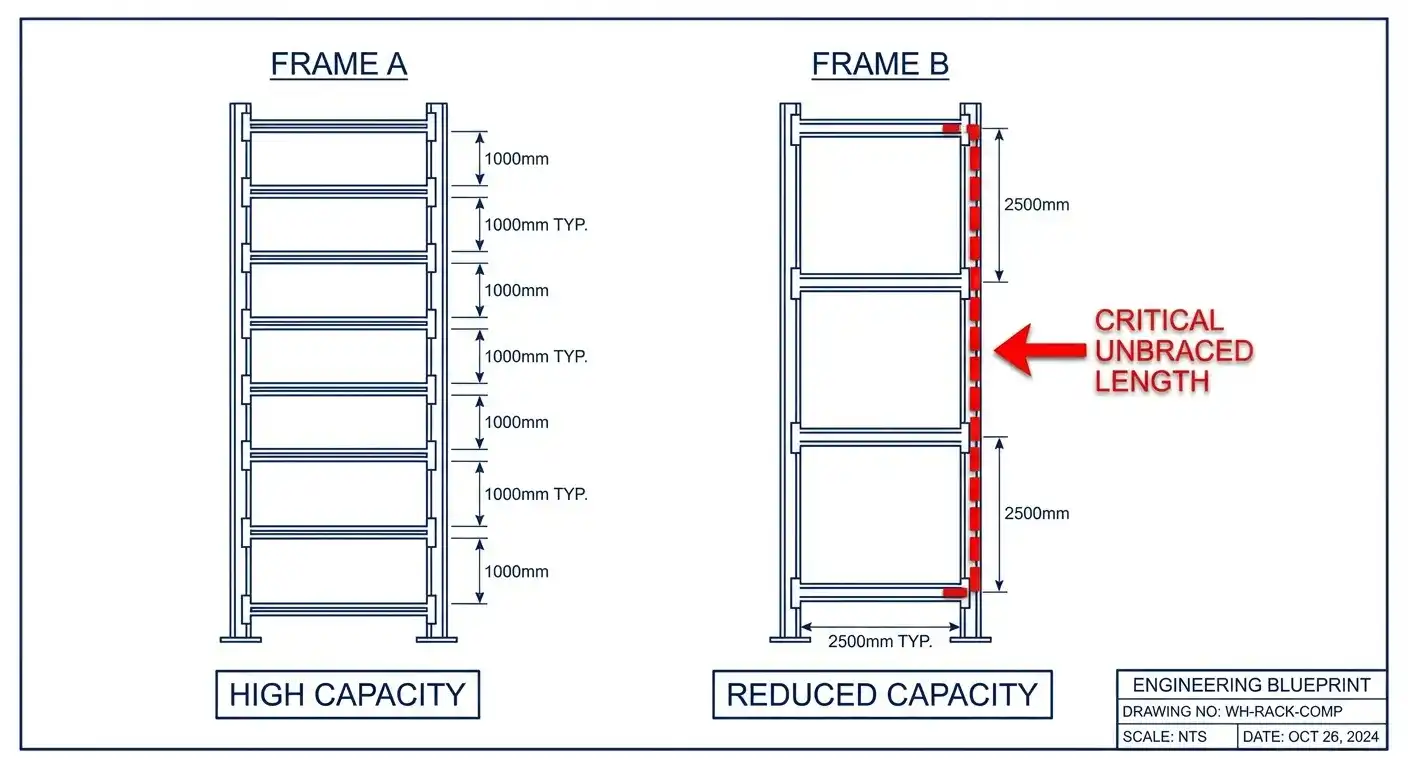
The capacity of an upright frame fluctuates based on the vertical beam spacing (the distance between levels). The unsupported span of the upright column is the weak point.
The Golden Rule:
The greater the vertical distance between beam levels, the lower the total capacity of the upright frame.
| Vertical Beam Spacing (mm) | Upright Frame Capacity (kg) – Example Profile | Reduction Factor |
|---|---|---|
| 1000mm | 12,000kg | 100% (Baseline) |
| 1500mm | 10,500kg | ~87% |
| 2000mm | 8,800kg | ~73% |
| 2500mm | 7,000kg | ~58% |
Note: This data serves as an illustrative example. Always refer to the specific load tables provided by Spieth for your steel gauge and profile.
2. Project Planning: How to Calculate Required Capacity for Your Warehouse Layout
Example: A frame rated for 18,000kg at 1,500mm spacing drops to roughly 16,200kg at 1,800mm spacing, and 14,600kg at 2,100mm spacing.selective pallet racking or drive-in systems, run these calculations to determine your baseline requirements.
Step A: Determine the Load Per Beam Level
Longer beams experience greater bending moments under load. Industry standards limit deflection to L/180 (beam length divided by 180) under maximum load to prevent pallet instability.
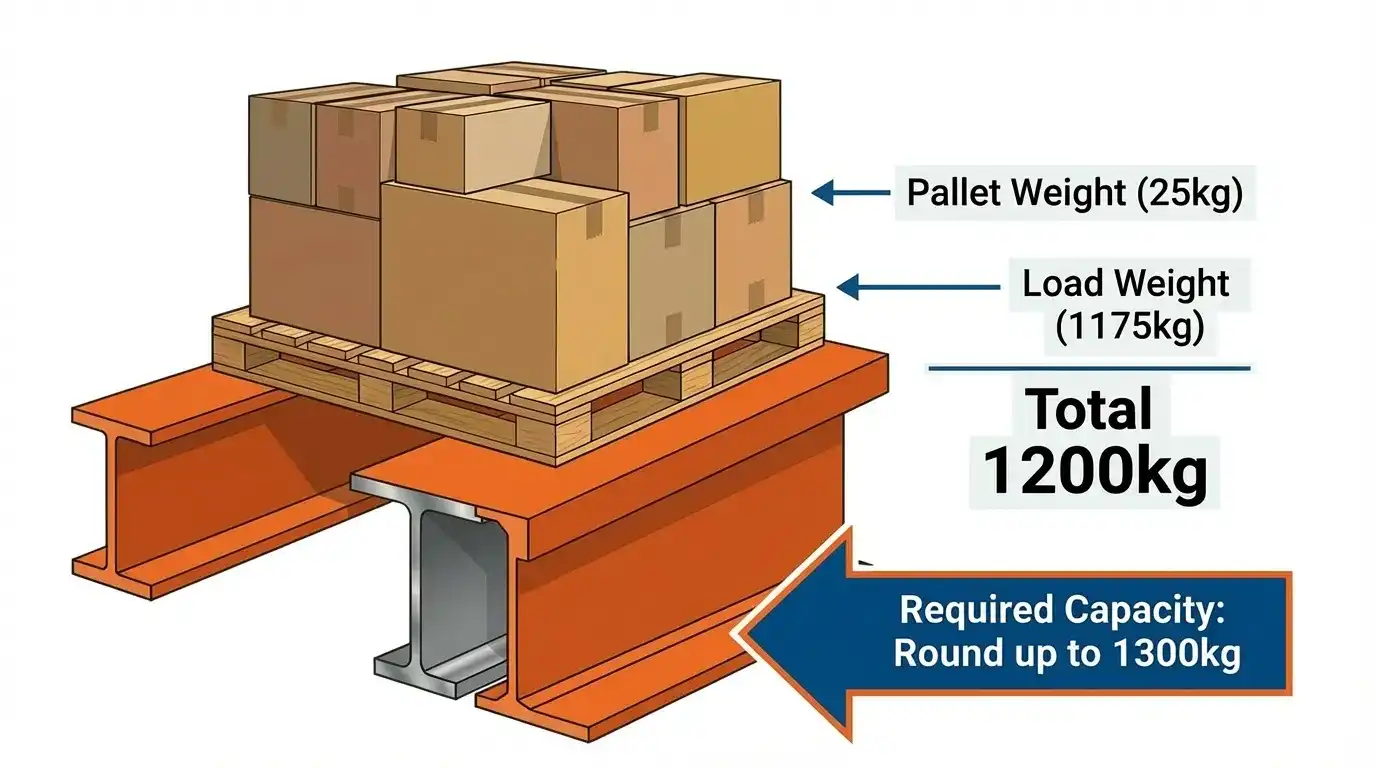
- Weigh Your Pallets: Include the weight of the wooden pallet itself, plus the maximum load of goods.
- Multiply by Quantity: Multiply the single pallet weight by the number of pallets you intend to store on one beam level (typically 2 or 3).
- Round Up: Always round up to the nearest 100kg for a safety margin.
Example Calculation:
- Pallet Weight: 1,200kg
- Pallets per level: 3
- Required Beam Capacity: 3,600kg per pair (UDL).
Step B: Determine the Total Bay Load
Your concrete slab must withstand the concentrated point loads transmitted through upright base plates. Standard industrial floors (150mm thickness, 25 MPa concrete) handle 40-50 kN per base plate. High-density storage may require 60+ kN capacity, necessitating thicker slabs or fiber reinforcement.
- Count the Levels: How many beam levels will the bay have? (Do not count the floor level, as the floor bears that weight directly).
- Multiply: (Beam Capacity per Level) × (Number of Levels).
- Add Safety Margin: Add 5-10% for potential future inventory changes.
Example Calculation:
- Beam Load: 3,600kg
- Number of Levels: 4 (excluding floor)
- Total Frame Load: 14,400kg.
If your warehouse requires reconfiguration later—for example, removing a beam level to store taller items—you must re-evaluate the frame capacity because the unsupported span has increased.
3. Critical Factors Influencing Structural Integrity
Beyond the basic math, several physical factors influence the actual safe working load (SWL) of your racking system. Ignoring these can lead to “silent failures” where metal fatigue accumulates over time.
Steel Grade and Gauge (Thickness)
Not all steel is created equal. High-quality industrial racking typically utilizes Q235B or Q355 high-tensile steel. The thickness of the steel (gauge) directly correlates to capacity. A standard upright might be 1.5mm thick for light loads, but heavy-duty applications often require 2.0mm, 2.5mm, or even 3.0mm steel.
Beam Connector Design
The connection point where the beam hooks into the upright is a stress concentration zone.
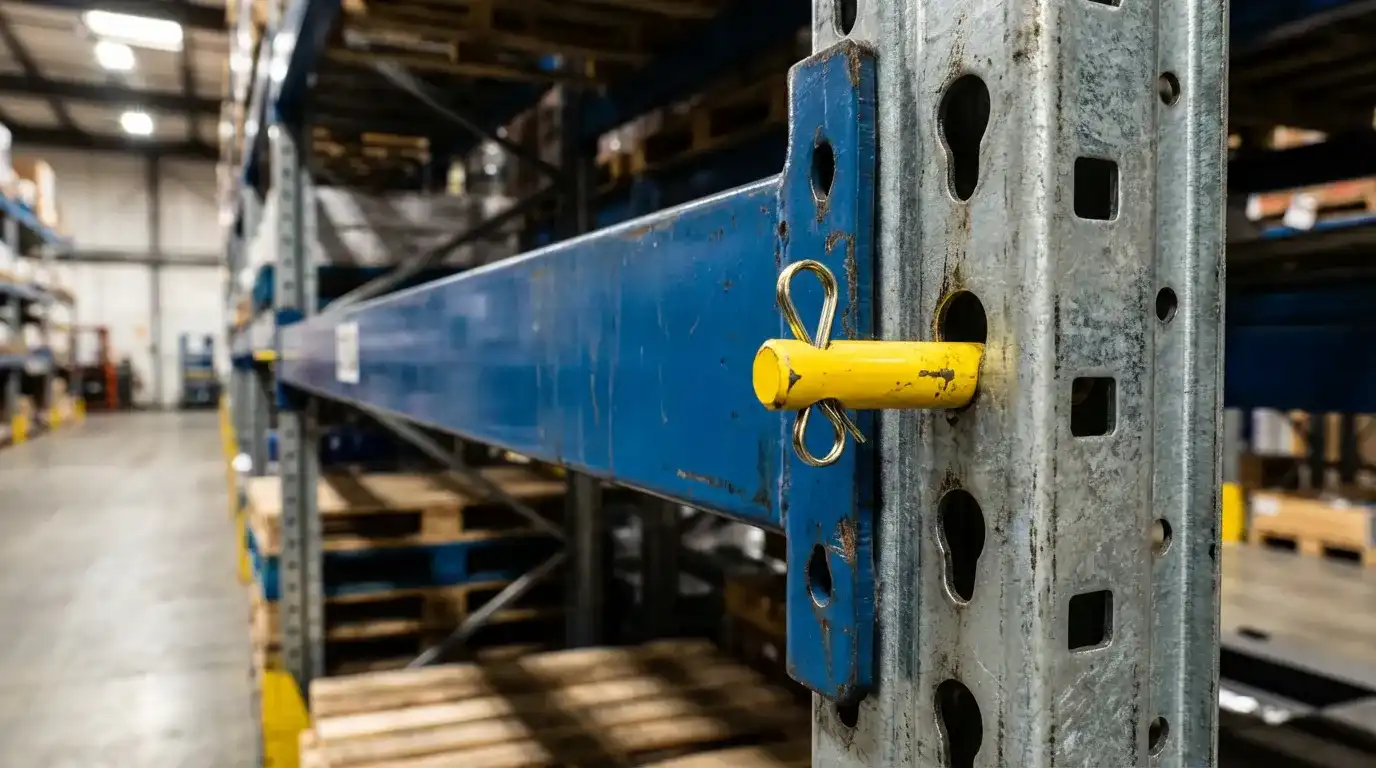
- Safety Pins/Locks: These are non-negotiable. They prevent beams from being accidentally dislodged by a forklift uplift.
- Connector Hooks: Beams with 3 or 4 hooks provide greater stability and moment resistance than those with only 2 hooks.
Floor Slab Capacity
Check your beam’s rated capacity from the manufacturer’s load tables. A 2,700mm beam with 120mm height and 1.8mm gauge typically rates for 2,800-3,200kg depending on profile design.
If your required capacity (3,105kg) exceeds the beam rating, you must either:warehouse aisle widths is crucial. Narrowing your aisles can increase storage density, but it requires specialized forklifts and affects how you calculate beam lengths.
4. Industrial Load Table: Heavy-Duty Q235B Steel Profiles
The following chart details the safe working loads for our industrial-grade beam profiles. These specifications are designed for standardized palletized goods in commercial logistics environments.
Note: These figures apply to static loads in ambient temperature warehouses. For cold storage or seismic zones, a custom engineering audit is required.
| Beam Length (mm) | Profile Height (mm) | Steel Thickness (mm) | Max Load / Pair (kg) | Typical Usage |
|---|---|---|---|---|
| 2300 | 100 | 1.5 | 2100 | Standard Euro Pallets |
| 2700 | 120 | 1.5 | 3000 | General Industrial |
| 2700 | 140 | 1.5 | 3800 | Heavy Machinery Parts |
| 3300 | 160 | 2.0 | 4500 | Oversized Goods |
| 3600 | 160 | 2.0 | 4200 | Bulk Storage |
| 3900 | 180 | 2.0 | 4000 | Extra Wide Span |
Caution: Longer beams generally have lower capacities for the same profile height due to increased deflection risks.
5. Safety Protocols and Overloading Signs
Maintaining a safe warehouse is an ongoing process. Even correctly calculated racks can become dangerous if misused.
Recognizing the Warning Signs
Visual inspections should be part of your weekly routine. Look for:
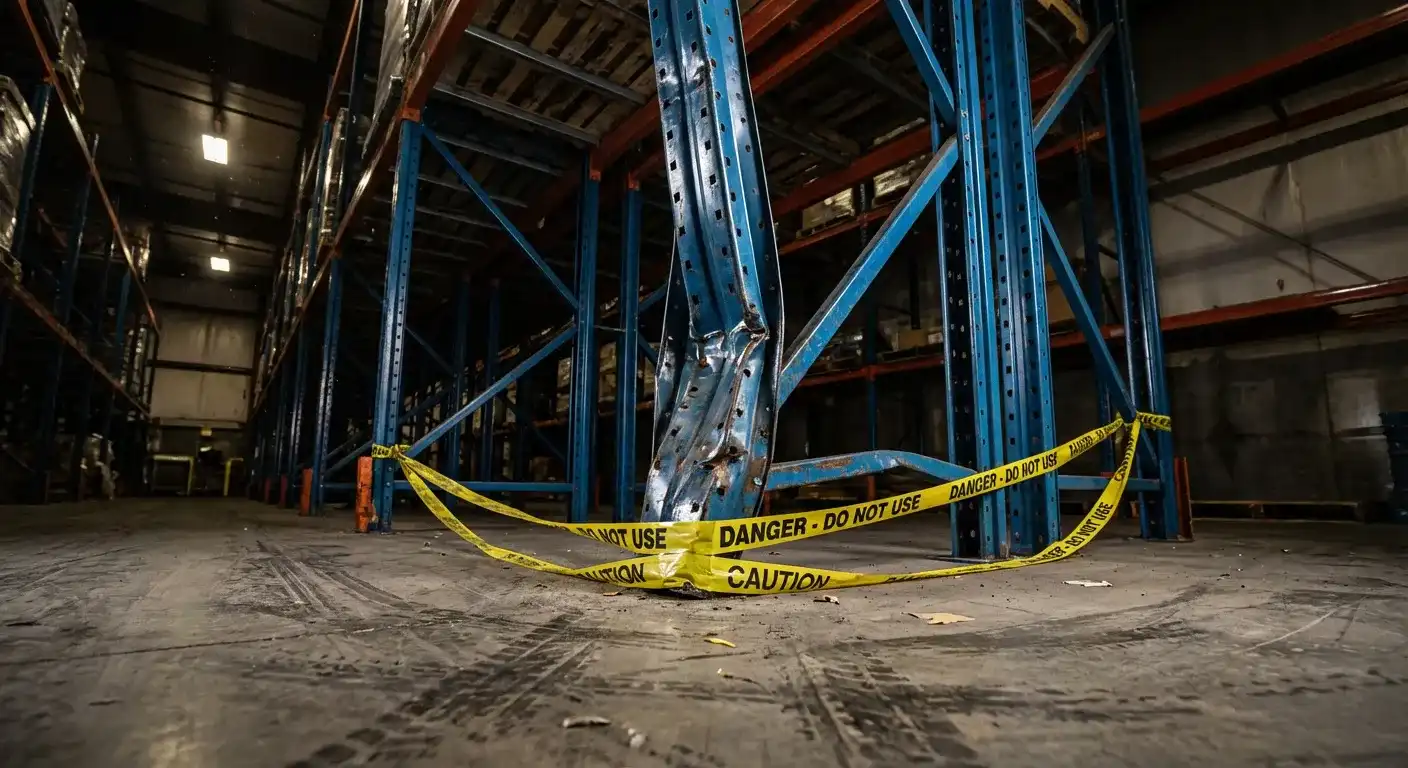
- Beam Deflection: If a beam remains curved after the pallets are removed, the steel has yielded (permanently deformed) and must be replaced immediately.
- Upright Damage: Forklift impacts usually happen at the bottom 1 meter of the upright. Any crease or dent larger than 3mm can reduce capacity by up to 40%.
- Missing Safety Clips: Ensure every beam-to-frame connection is secured.
Correct Loading Practices
- Heaviest at the Bottom: Always place your heaviest pallets on the lower levels. This keeps the center of gravity low and stabilizes the rack.
- Load Evenly: Instruct forklift drivers to center pallets on the beams. Do not push pallets against each other to “tighten” the pack.
- Adhere to Plaque Data: Every rack system must display a load notice plaque at the end of the aisle. Never exceed these stated limits.
13,500kg ÷ 16,000kg = 84.4% utilization—
Partner with a Professional Manufacturer for Your Warehouse Project
Calculating racking capacity is the first step in the procurement process. To ensure your facility meets all safety regulations and maximizes vertical storage efficiency, you need a partner who understands industrial engineering.
Spieth provides end-to-end B2B services, from structural analysis and CAD warehouse layout design to the manufacturing of high-tensile steel racking systems. Don’t rely on generic estimates for your business. Visit our Contact Us to request a formal project quote and speak with our structural engineers today.