Warehouse pallet storage systems
Pallet racking is an essential industrial material handling storage system designed to maximize warehouse storage density. By storing palletized materials in horizontal rows across multiple levels, it efficiently utilizes vertical space using key components like upright frames, beams, and wire decking, which are typically accessed by forklifts.
To accommodate different operational needs, these storage systems come in several variations. Common types include selective racking for direct access to all goods, double-deep racking for higher capacity, and drive-in configurations for maximum density.
Types of Pallet racking
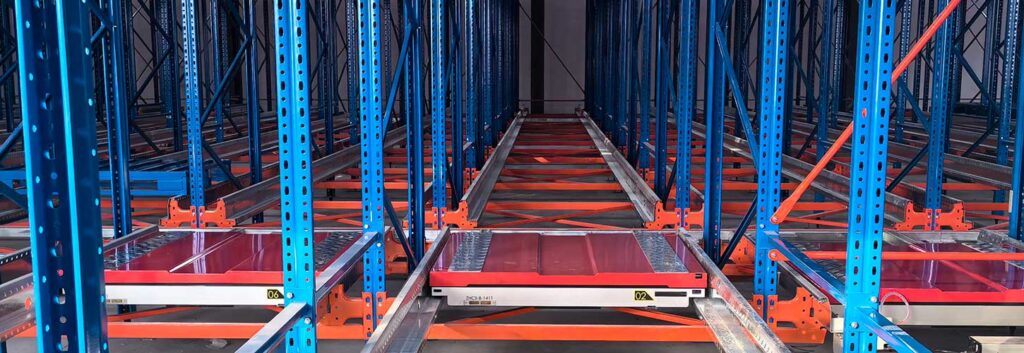
Radio Shuttle Racking
Radio Shuttle Racking System Radio Shuttle Racking is a semi-automated high-density storage solution that combines traditional pallet racking
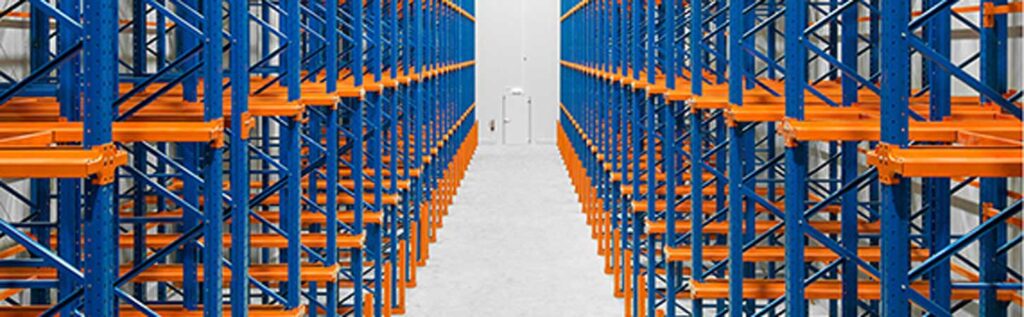
Drive In Racking
What is Drive In Racking? Drive In Racking is a high-density warehouse storage system designed to maximize pallet
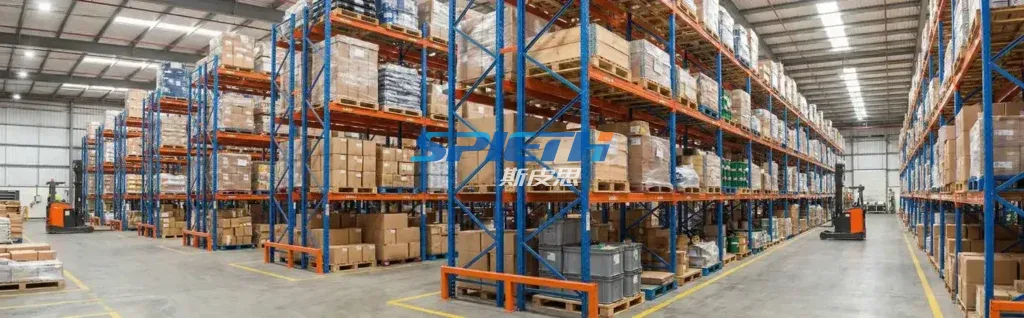
Selective Pallet Racking
What is Selective Pallet Racking? Selective Pallet Racking (also known as Adjustable Pallet Racking or Beam Racking) is
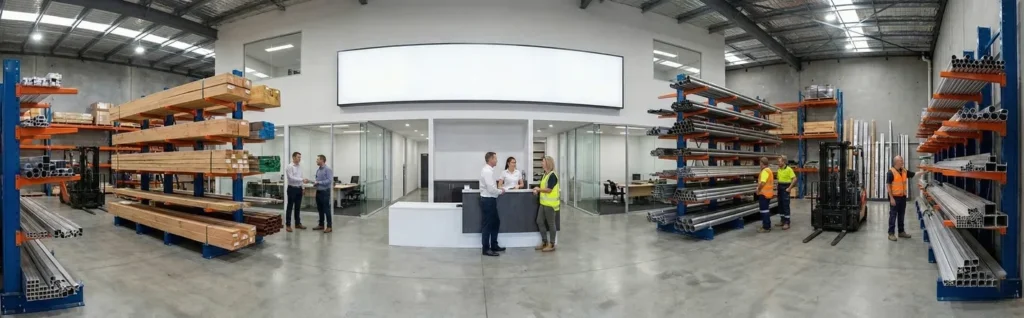
Cantilever Racking System
Heavy-Duty Cantilever Racking System Manufacturer Optimizing your warehouse for long, irregular loads requires more than just shelving; it
Advantages of Pallet Racks
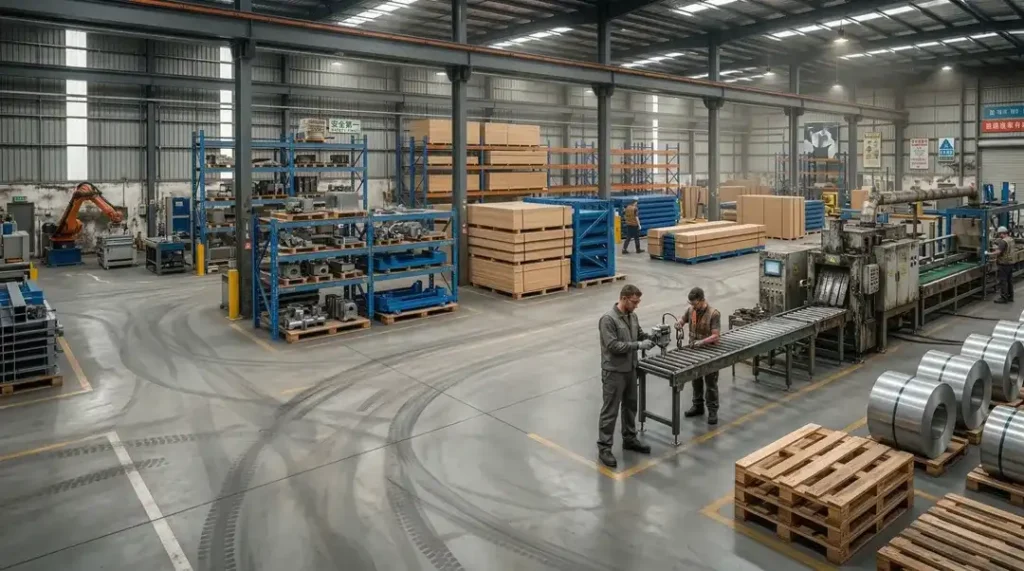
- High-Quality Raw Materials: The racks are manufactured using premium steel materials, specifically Q235, Q345, and SS400, sourced from major factories like Baosteel. These materials undergo strict quality testing.
- Comprehensive Pre-treatment: All products undergo thorough pre-treatment processes. These processes include shot blasting, pickling, and phosphating.
- Strict Coating Quality Control: To ensure the best finish, all products undergo a cross-cut test (hundred-grid test) after the spraying process. This strictly controls the quality of the product’s coating.
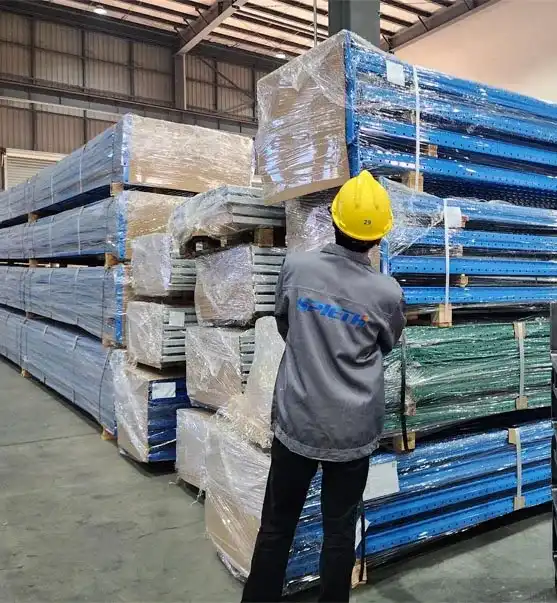
- Premium Export Packaging: The best export packaging methods are utilized. This includes using paper sleeves at both ends of the beams and adding protective cardboard at forklift operational positions.
- Guaranteed Safety and Certifications: Product safety is highly guaranteed. The racks have successfully passed the Australian AS4084-2012 testing certification and have also obtained CE certification.
Features of Standard Pallet Racks
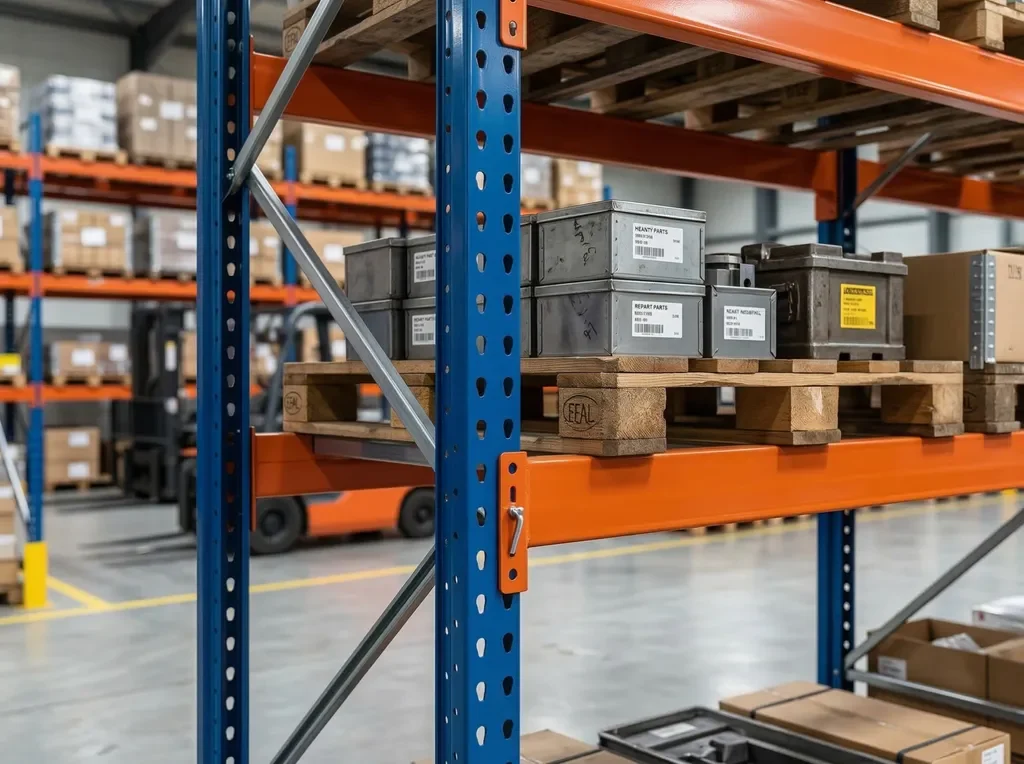
- Most Common & Cost-Effective: It is the most commonly used storage system, offering a low-cost solution, though it has a lower storage density compared to some other systems.
- High Load Capacity: It can handle heavy loads, with each layer capable of supporting between 1 to 4.5 tons.
- High Adjustability: The height of each layer can be easily adjusted to accommodate different cargo sizes, utilizing standard pitches of 50mm, 75mm, or 76.2mm.
Main Components & Accessories
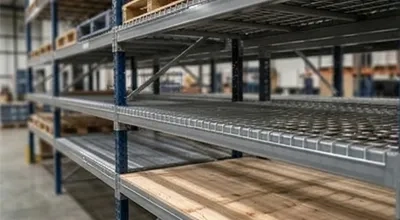
Decking & Support Options
- Decking Panels: Options include steel decking panels, wire mesh decking panels, or plywood.
- Pallet Support Bars: Added across the beams to provide extra support under the pallets.
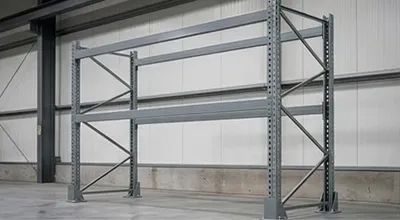
Core Frame
- Uprights: The main vertical supports, available in sizes such as 80×60, 90×70, 100×70, 100×90, and 120×95.
- Beams: The horizontal load-bearing members (e.g., Box Beams), available in various cross-sections ranging from 80×40 to 180×50.
- Bracing: Diagonal and horizontal bars that connect the uprights to form a stable frame.
- Base Plates: Used to anchor the uprights securely to the floor.
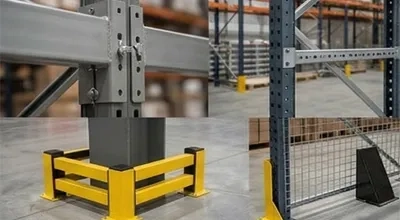
Safety & Protection Accessories
- Safety Locks: Pins used to secure the beam to the upright and prevent accidental dislodgement.
- Row Spacers: Connectors used to tie back-to-back rack rows together, enhancing overall structural stability.
- Upright Protectors & Barriers: “U” or “L” shaped protectors and collision guardrails installed at the base to defend against forklift impacts.
- Stoppers & Meshes: Pallet back stoppers, back/side mesh panels, and solid back/side panels to prevent goods from falling off the racks.
Why Choose Pallet Racking?
As a racking manufacturer, Spieth standard pallet racking for its versatility and cost-effectiveness. It is the most universally used storage system in modern warehouses due to its low setup cost and high practicality.
Whether you are storing varied goods or heavy materials, pallet racks offer an exceptional load capacity ranging from 1 to 4.5 tons per level.
At Spieth, our factory custom-engineers these systems to maximize your warehouse space, ensuring highly efficient inventory management tailored to your specific forklift operations and aisle dimensions.
Frequently Asked Questions
A: Pallet racking is a material handling storage system designed to store goods on pallets in horizontal rows with multiple levels. It maximizes a warehouse's vertical space, improves inventory organization, and allows for efficient loading and unloading using forklifts.
A: A standard selective pallet rack typically holds between 2,000 to 3,000 lbs (approx. 1,000 to 1,360 kg) per pallet position. A standard beam level holding two pallets generally supports up to 6,000 lbs (around 2,700 kg), but actual capacities depend on the manufacturer's specific engineering and steel quality.
A: Selective pallet racking is the most widely used type globally. It allows 100% direct access to every single pallet at all times, making it the perfect and most cost-effective solution for warehouses managing a wide variety of SKUs and high inventory turnover.
A: Yes. Pallet racks must be anchored to the concrete floor using heavy-duty bolts to ensure structural stability, prevent tipping or collapse from forklift impacts, and comply with international warehouse safety standards like OSHA or AS4084.
A: Aisle width strictly depends on the type of forklift being used. Standard counterweight forklifts require aisles 12 to 13 feet wide. Reach trucks typically need 8 to 10 feet, while Very Narrow Aisle (VNA) systems only require about 5 to 7 feet.
A: Pallet racks can be built as high as your warehouse ceiling and forklift lifting capacity allow. Standard warehouse racks are typically 12 to 25 feet (3.6 to 7.6 meters) tall, but high-bay or automated systems can easily exceed 40 feet (12 meters).
A: Pallet racks should undergo brief visual inspections by warehouse staff weekly or monthly, and a comprehensive, documented inspection by a qualified professional at least once a year. Any rack involved in a forklift collision must be inspected immediately before further use.
How to Choose the Right Pallet Racking System for Your Business
Selecting the optimal pallet racking system directly impacts warehouse operational efficiency, storage density, and workplace safety. Implementing the correct industrial pallet racking system resolves these challenges by maximizing vertical space and streamlining inventory management.
This guide provides a comprehensive framework to help you evaluate your facility’s specific needs, understand the available engineering options, and make an informed investment decision.
Assessing Your Warehouse Storage Needs
Before comparing hardware, you must conduct a thorough audit of your current and projected operational requirements. it requires precise engineering tailored to your facility.
Analyzing Your Available Space
The physical dimensions of your warehouse serve as the foundational parameters for your new pallet racking system.
You must measure the clear ceiling height, accounting for obstructions such as fire sprinklers, HVAC ducts, and lighting fixtures. Furthermore, mapping the floor plan is essential. The placement of building columns, shipping docks, and pedestrian walkways will directly influence the orientation and length of the industrial pallet racking system rows. Maximizing vertical space is the primary objective, but doing so requires strict adherence to local fire codes regarding the clearance between the top load and the ceiling.
Understanding Your Inventory Profile
Your inventory characteristics dictate the mechanical design of your warehouse storage solutions.
You need to assess the number of distinct Stock Keeping Units (SKUs) you handle versus the volume of pallets per SKU. If you store many different SKUs with only one or two pallets each, you require high selectivity. Conversely, if you store hundreds of pallets of the exact same SKU, you need high-density storage. Additionally, consider product shelf life. Perishable goods demand a First-In, First-Out (FIFO) pallet racking system to prevent spoilage, while non-perishable bulk goods can utilize a Last-In, First-Out (LIFO) configuration.
Core Types of Pallet Racking Systems
Understanding the distinct categories of warehouse storage solutions allows you to match the engineering to your inventory profile. Below is a structural comparison of the most common configurations.
| System Type | Access Method | Selectivity | Storage Density | Best Suited For |
| Selective Pallet Racking System | Direct Access (100%) | High | Low to Medium | High SKU counts, varied inventory, fast turnover. |
| Drive-In Pallet Racking System | LIFO | Low | Very High | Low SKU counts, bulk storage, non-perishable goods. |
| Push Back Pallet Racking System | LIFO | Medium | High | Medium SKU counts, high volume per SKU, batch retrieval. |
| Pallet Flow Racking System | FIFO | Low to Medium | Very High | High volume perishable goods, strict date rotation. |
Selective Pallet Racking System
The selective pallet racking system remains the most universally implemented configuration globally. It provides direct access to every single pallet position at all times without needing to move surrounding inventory. This design is highly recommended if your operation handles a vast array of different SKUs with fast turnover rates. While it requires more dedicated aisle space compared to denser options, the selective pallet racking system offers unparalleled flexibility, ease of inventory tracking, and rapid picking times.
Drive-In Pallet Racking System
When storage density is the ultimate priority over immediate selectivity, the drive-in pallet racking system is highly effective. This configuration eliminates standard aisles, allowing a forklift to drive directly into the storage bays on guide rails to deposit or retrieve loads. Because it operates strictly on a Last-In, First-Out (LIFO) principle, the drive-in pallet racking system is best suited for facilities handling large quantities of homogeneous products where stock rotation is not a critical concern.
Push Back Pallet Racking System
The push back pallet racking system offers a balanced compromise between high-density storage and reasonable selectivity. Pallets are loaded onto nested carts that roll on inclined structural rails. When a new pallet is deposited, it pushes the existing pallets backward into the lane. When a front pallet is removed, gravity brings the next pallet forward to the picking face. This dynamic LIFO industrial pallet racking system allows you to store multiple pallets deep per level, significantly increasing overall warehouse storage capacity while maintaining dedicated lanes for different SKUs.
Pallet Flow Racking System
For strict First-In, First-Out (FIFO) inventory management, the pallet flow racking system is the superior engineering choice. Pallets are loaded at the rear end of the system and glide seamlessly down inclined roller tracks to the front picking face via gravity. Brakes are installed within the rollers to control the descent speed. This configuration ensures perfect stock rotation, making the pallet flow racking system indispensable for the food and beverage industry, pharmaceutical storage, or any operation managing highly date-sensitive merchandise.
Crucial Factors in Your Selection Process
Once you have determined the optimal structural type for your inventory, you must refine the technical specifications of your industrial pallet racking system.
Load Capacity and Weight Distribution
The structural integrity of your warehouse storage solutions is non-negotiable and strictly regulated. You must accurately calculate the maximum static and dynamic weight of your heaviest loaded pallet. This empirical data dictates the required gauge of steel, the profile of the upright frames, and the specific engineering of the load beams. Utilizing heavy duty pallet racking is essential for facilities storing extremely dense materials like industrial machinery, raw metals, building supplies, or bulk liquids. Undervaluing your load capacity requirements compromises workplace safety and risks catastrophic structural failure. Always ensure that the specified heavy duty pallet racking complies with strict safety standards and that weight is evenly distributed across the beam lengths.
Material Handling Equipment Compatibility
Your pallet racking system and your forklift fleet must operate as a fully integrated, synchronized unit. The type of forklifts you currently operate—or plan to procure—directly impacts the required aisle width and racking height. Standard counterbalance forklifts typically require aisles up to 12 feet wide, which reduces the total footprint available for the industrial pallet racking system itself. Conversely, Narrow Aisle (NA) or Very Narrow Aisle (VNA) reach trucks allow you to condense aisle widths to as little as 6 feet, dramatically increasing the available cubic area for the pallet racking system. You must firmly establish that the maximum safe lift height of your material handling equipment exceeds the highest operational beam level of your planned pallet racking system.
Why Partnering with a Pallet Racking System Manufacturer
Choosing the right infrastructure is just as crucial as selecting the type of project. Partnering with Spieth, a pallet racking systems manufacturer, ensures your facility receives equipment designed for durability, safety, and precise application. As a professional pallet racking systems manufacturer, Spieth has complete control over the manufacturing process, ensuring that every steel component of your heavy-duty pallet racking meets stringent quality assurance standards before leaving the factory.
Spieth creates robust, efficient, and customized warehouse storage solutions. Whether your business requires standard selective racking systems or custom heavy-duty pallet racking capable of withstanding extreme loads, our expert engineering team is ready to assist you. Contact Spieth today.