Deciding between cantilever racking and pallet racking is one of the most critical choices you will make when optimizing your warehouse layout. The efficiency of your facility depends entirely on matching the storage system to the inventory you hold. While standard pallet racks are the backbone of most distribution centers, they fail miserably when tasked with storing long, awkward items like lumber or piping. Conversely, force-fitting palletized goods onto a cantilever system is an expensive waste of specialized engineering.
This guide dissects the differences between these two industrial stalwarts, helping you determine exactly which system—or which combination—will maximize your square footage and operational speed.
Key Takeaways
- Core Difference: Pallet racking is designed for uniform, cubic loads; cantilever racking is engineered for long, bulky, and irregular items.
- Accessibility: Cantilever racks offer 100% accessibility with no front columns, whereas pallet racks are restricted by vertical uprights.
- Cost Efficiency: Pallet racking is generally cheaper per pallet position, while cantilever requires a higher initial investment but saves money on damaged inventory and wasted space for specific goods.
- Versatility: Cantilever systems are highly adjustable for varying load lengths; pallet racks are rigid but excellent for high-density cubic storage.
What is Cantilever Pallet Racking?
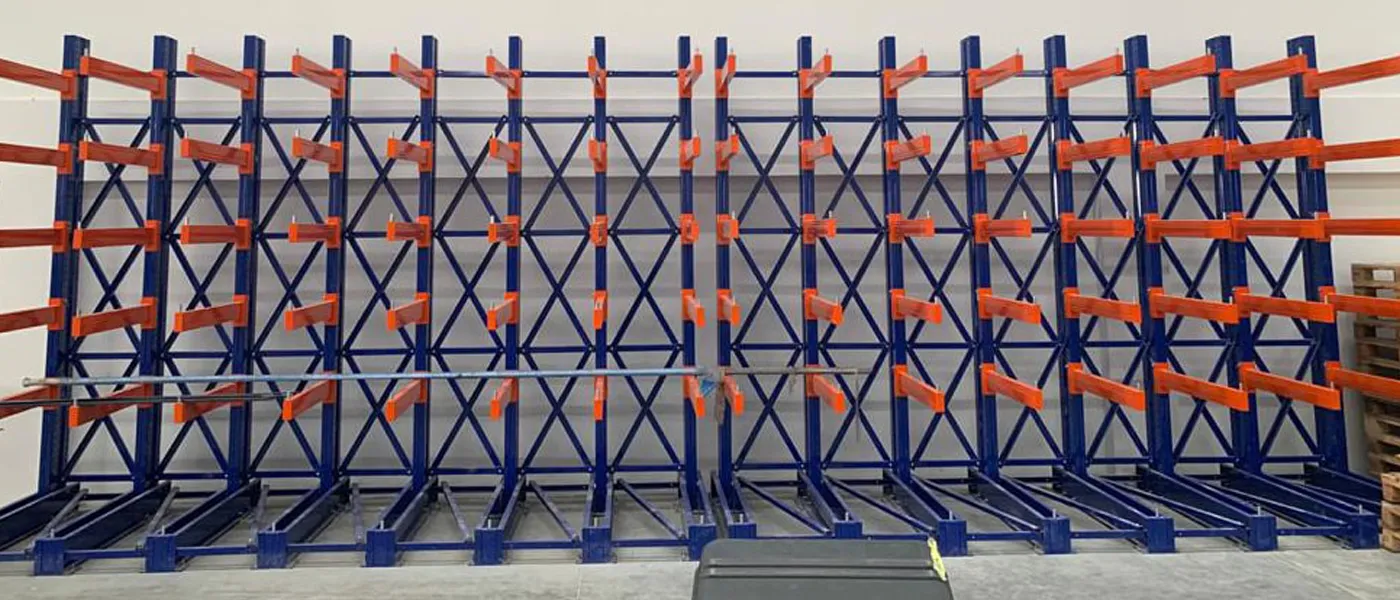
Before diving into the comparison, clarification is needed on terminology. “Cantilever pallet racking” is often a misnomer or refers to a hybrid application. In the strict industry sense, cantilever racking consists of a vertical column, a base, arms, and horizontal bracing. It has no front column, making the face of the rack completely open.
However, you can adapt cantilever systems to hold pallets. This is done by placing solid decking or wire mesh across the cantilever arms to create a continuous shelf. This configuration allows a warehouse to store a mix of long items (like furniture or steel bars) alongside standard pallets on the same rack run. It offers incredible flexibility for operations that deal with changing inventory profiles, though it is generally more expensive than dedicated selective pallet racking.
A Technical Overview
The Mechanics of Pallet Racking
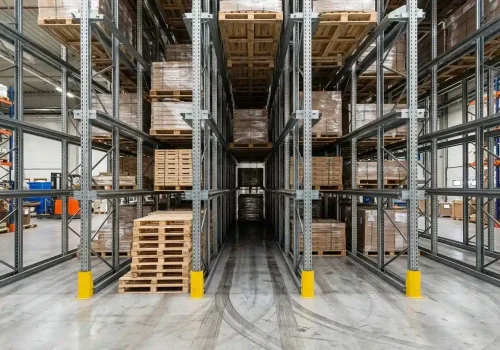
Standard selective pallet racking is the most common storage system in the world. It utilizes vertical upright frames and horizontal load beams. The pallets rest on these beams. It provides direct access to every pallet but is constrained by the width between the uprights. If you have a 12-foot beam, you cannot store a 16-foot item without it protruding dangerously into the aisle or hitting the next upright.
- Boxed goods on standard wooden pallets (40″ x 48″).
- High-SKU count inventory requiring direct access.
- First-In, First-Out (FIFO) inventory management.
The Mechanics of Cantilever Racks
Cantilever storage racks use a center column with arms extending outward. These arms act as the shelf levels. Because there is no vertical obstruction at the face of the aisle, you can place a load of any length across multiple arms. If you need to store a 20-foot piece of PVC pipe, you simply lay it across three or four arms. If you need to store a 40-foot steel beam, you just add more columns to the run.
- Lumber, plywood, and drywall.
- Steel pipes, tubes, and bar stock.
- Furniture and appliances.
- Irregularly shaped automotive parts (like exhaust systems).
Detailed Comparison: Cantilever vs. Pallet Racking
When evaluating these systems, you need to look at three main variables: Load Profile, Space Utilization, and Cost.
1. Load Profile Compatibility
This is the primary filter for your decision. If your inventory is 100% palletized goods that fit within a 48-inch square footprint, cantilever is unnecessary. However, if your SKU list includes items that vary wildly in length, pallet racking becomes a hindrance.
The “Long Load” Problem Trying to store long items in pallet racking is inefficient and dangerous. You end up wasting the vertical space above the item because the beams are set for pallet heights, or you have to leave empty spaces between uprights to maneuver the long item in and out. Cantilever racks solve this by providing a continuous horizontal storage plane.
2. Space Utilization and Accessibility
Forklift operators love cantilever systems for long goods because there is no “target” to hit between posts. This speeds up loading and unloading times significantly.
- Vertical Space: Both systems utilize vertical height well, but cantilever arms are generally easier to adjust. You can move arms up or down on the column (often on 3-inch or 4-inch centers) to accommodate changing inventory heights without disassembling the entire rack.
- Linear Space: Pallet racks have fixed bay widths. Cantilever racks have continuous linear storage.
| Feature | Pallet Racking | Cantilever Racking |
|---|---|---|
| Front Access | Obstructed by vertical uprights every 8-12 feet. | Completely open; no vertical obstructions. |
| Loading Speed | Fast for pallets; slow/difficult for long items. | Fast for long items; requires care for pallets (unless decked). |
| Forklift Requirement | Standard counterbalance or reach trucks. | Often requires side-loaders or 4-way directionals for long loads in narrow aisles. |
| Adjustability | Beams clip in; requires clearing the bay to move. | Arms are bolted or pinned; easier to adjust individually. |
3. Cost Implications
Budget is always a factor. Generally speaking, standard selective pallet rack components are mass-produced and commoditized, making them the most cost-effective solution for standard loads.
Cantilever components (bases, columns, arms) involve more steel and heavier engineering to support loads from a single side. Consequently, the cost per storage position is higher. However, you must calculate the Total Cost of Ownership. Storing lumber on the floor because you don’t have cantilever racks leads to damage from moisture and forklifts. That inventory loss often outweighs the initial investment in proper racking.
Heavy Duty Cantilever Racks
For industrial environments like steel service centers or heavy manufacturing, standard racking won’t suffice. This is the domain of structural cantilever racking. Unlike roll-formed steel, structural cantilever components are made from hot-rolled I-beams.
These heavy-duty cantilever racks can support massive weight loads—often exceeding 5,000 lbs per arm. If you are storing heavy steel coils, bundles of rebar, or structural steel beams, I-beam cantilever is the only safe option. They resist forklift impact much better than roll-formed steel and provide a rigid, durable storage solution for decades.
Accessories for Safety
When deploying heavy-duty systems, consider these safety add-ons:
- Pipe stops: Metal pins at the end of the arm to prevent round items (pipes) from rolling off.
- Guide rails: Installed on the floor to guide the forklift, protecting the rack base from impact.
- Arm lips: Welded flanges to secure specific load types.
Design Considerations for Cantilever Racks
If you determine that cantilever is the right path, you must specify the system correctly. Errors in calculation here can lead to rack failure.

1. Determine the Load: You need to know the length, depth, height, and weight of the load.
- Load Length: Determines the number of arms needed to support the product without deflection (sagging).
- Load Depth: Determines the length of the cantilever arm. The load should not overhang the end of the arm significantly.
2. Calculating Capacity: The capacity of a cantilever rack is calculated based on the arm capacity and the column capacity.
- If you have a 2,000 lb load supported by two arms, each arm must hold 1,000 lbs.
- The column must support the total weight of all arms attached to one side of it.
3. Arm Spacing (The Deflection Test): To prevent your load from sagging between arms (which causes damage), you must space the arms correctly. A simple test is to place your load on two wooden blocks on the floor. Move the blocks closer together or further apart until the load is stable and doesn’t sag. The distance between the blocks represents your ideal arm spacing.
| Metric | Definition | Why it Matters |
|---|---|---|
| Load Overhang | How much the product extends past the arm end. | Too much overhang causes instability and safety hazards. |
| Vertical Clearance | Space between the top of the load and the next arm. | Essential for forklift operators to lift the load slightly to remove it. |
| Lateral Spacing | Distance between upright columns. | Incorrect spacing leads to load deflection (sagging). |
| Base Size | Footprint of the rack anchor. | Must match the length of the arm to prevent tipping. |
Used Cantilever Racks: Are They Worth It?
Budget constraints often lead facility managers to the used market. Searching for “used cantilever racks” can yield significant savings, often 30-40% less than new systems. However, diligence is required.
Unlike pallet racking, which is fairly standardized, cantilever racks are often custom-engineered for a specific load. Buying a used rack that was designed for aluminum piping and using it for heavy steel bar stock is a recipe for disaster.
Checklist for Used Equipment:
- Verify the manufacturer: Can you still get parts?
- Inspect for rust and damage: Structural integrity is paramount.
- Confirm capacity ratings: Do not guess. Obtain the original load tables if possible.
- Hardware: Ensure all pins, bolts, and braces are included.
For a complete guide on how to safely inspect and purchase used systems, please read our detailed article on used cantilever racks.
Conclusion
Pallet racking offers density and economy for your standard cubic loads. Cantilever racks provide the versatility and accessibility required for the awkward, long, and heavy items that slow down your operation.
By integrating the correct storage systems, you reduce forklift travel time, minimize product damage, and ultimately increase the throughput of your facility.
Ready to maximize your warehouse potential? At Spieth Pallet Rack, we specialize in designing high-efficiency storage solutions tailored to your unique inventory mix. Whether you need heavy-duty structural cantilever for steel storage or a high-density pallet flow system, our engineering team is ready to assist.
Contact us today for a free consultation and warehouse layout design.
FAQ
Q: What is the difference between pallet rack and cantilever rack?
A: The main difference lies in the structure and application. Pallet racks feature front and rear upright columns connected by beams, creating a “box” perfect for standard pallets. Cantilever racks use a central column with arms extending out, leaving the front completely open. This makes cantilever racks ideal for long, irregular items like lumber or pipe, while pallet racks are best for uniform, cubed loads.
Q: How much does cantilever racking cost?
A: The cost varies significantly based on capacity (light vs. heavy duty) and size. Generally, a cantilever system is more expensive per storage position than selective pallet racking due to the heavier steel engineering required. However, for storing long goods, it is often cheaper in the long run because it prevents product damage and utilizes space that pallet racking wastes. Expect custom quotes based on steel weight and configuration.
Q: Is it safe to put pallets on cantilever racks?
A: Yes, but only if the system is designed for it. You cannot simply balance a pallet on two arms; this is unstable and dangerous. You must install cantilever decking (either steel mesh or solid wood) to create a continuous shelf, or use specific arm configurations designed to support the pallet runners. Always consult the manufacturer before storing pallets on arms.
Q: Can you use cantilever racks outdoors?
A: Yes. Galvanized cantilever racks are specifically designed for outdoor use. The hot-dipped galvanized finish protects the steel from rust and corrosion caused by rain and snow. These are commonly used in lumber yards and roofing supply centers. Indoor painted racks should not be used outside as they will deteriorate quickly.
Q: How do I calculate the capacity for a cantilever rack arm?
A: Capacity is based on a Uniformly Distributed Load (UDL). This means the weight must be spread evenly over the length of the arm. If you place a 1,000 lb weight at the very tip of an arm rated for 1,000 lbs, it may fail because the rating assumes the weight is centered or evenly spread. Always center your load on the rack arms.